Saturday, April 30, 2022

Exotic/Disgusting Foods and Beverages Forum--Adult Popsicles (Freeze Pops with Booze in Them) Part 2, Plus Some Writing News

     About a year and a half ago (on November 14, 2020, to be exact), I reported on a new way to consume alcohol, in a frozen popsicle-like format.  Well, a few weeks ago I was in the same liquor store, and saw that they had some more, made by a different company.  So of course I had to try them, to compare and contrast them with the original Cooloo ones.  Anyway, this new company was Western Son, and I tried three of their SpikedIce variants--the blueberry lemonade, the screwdriver, and the raspberry.
     Western Son Distillery, also known as Western Son Vodka, is a company out of Pilot Point, Texas, in the U.S.  Their company website notes that the company was formed by "a small group of guys who were burned out on corporate environments and ready to carve out their own path."  This was done in 2011.  The website only mentions one of these gentlemen--the distiller Vincent Messina.  However other online sources indicated that the co-owner and President is John Straits, and the COO/CFO is Carlos Guillem.  I also found an article from 2015 that said that Western Son was one of five brands owned by the JEM Beverage Company, along with Brazos gin, Red River whiskey, South House moonshine, and Southern Son vodka.  And that the co-owners of JEM were John Straits and Evan Batt.  However, I didn't see this detail on more recent articles, so maybe JEM, and some or all of those other 4 brands are no more, or were sold off or went independent.  Although most of Western Son's products are either vodkas, or drinks made with vodka, Western Son does make a bourbon whiskey and a couple of gins.  Many of the vodkas have exotic flavors:  peach, cucumber, lemon, lime, grapefruit, prickly pear, raspberry, watermelon, and blueberry.  Additionally, I learned later that I actually bought their low calorie, diet-style frozen ice pops, as opposed to the regular, full calorie ones.  The regular kinds include blue raspberry, ice lemonade, raspberry lemonade, and watermelon cucumber.  The low calorie ice pops have between 62-66 calories in their 100 mL packages, while the regular sorts have between 122-137 calories for the same amount.  Other than that, Western Son alcohol is made using Midwest and Texas varieties of yellow corn, which is naturally gluten-free.  And the factory where their products are made in the site of "The Old Panty Factory."  (More accurately, the Russell-Newman Clothing Company, but maybe that business specialized in underwear.)

Western Son SpikedIce, blueberry lemonade:  Had a yellow color, and no discernable odor.  The alcohol content was 8%, and the number of calories was 62.  Had almost no taste, of lemonade, or anything else.  Disappointing, to say the least.

Western Son SpikedIce, screwdriver:  Also was 62 calories, and 8% alcohol.  Had kind of a boozy smell, and once again was yellow.  I could pick up a slight screwdriver flavor, but it was still pretty bland overall.  Slightly better than the previous one, but still not very good.  If the last one was a 2 out of 10, this one was maybe 3 of 10.

Western Son SpikedIce, raspberry:  This one was pink, and also had the liquor-ish odor (if that's a word).  8% alcohol, but 66 calories.  Had a raspberry-like taste, but it was somehow unpleasant.  Overly boozy flavor, kind of acrid.  Once again very disappointing, and the worst of the bunch.  I guess 1 out of 10.

     To sum up, then, I disliked or even hated these.  The Cooloo brand is looking even better in comparison.  However, these were the low calorie offerings.  Let's face it, diet version of regular foods and drinks almost always are strongly inferior.  So to be fair I 'll try to acquire the regular Western Son ice pops, and give them a try.  They could hardly be much worse.


     Writing-wise, I was recently in contact with T.J. Mackay, the owner/editor of In D'tale magazine.  Readers with exceptional memories may recall I had articles featured in this publication in December, 2012 ("The Right Title"), April 2014 (The Hilariously Odd World of Guidelines"), and April 2015 ("Rejection").  It looks like I'll have new articles appearing in several upcoming In D'tale issues, starting with the 10th Anniversary issue in June of this year.  I'll of course provide more details when I learn them.


Saturday, April 23, 2022

Exotic/Disgusting Foods and Beverages Forum--Goat Milk

     This was yet another fortuitous accident at the alternate Shop-Rite a while ago.  I was just going through an aisle, heading for the checkout, when I happened to glance upon this product.  I've had goat meat (see my post on June 23, 2013), and goat cheese (see the posts on August 19, 2017, July 31, 2021, and February 19, 2022), but never just the milk alone.  So I quickly remedied this.  The maker was Meyenberg, out of California in the U.S.
     The history of Meyenberg is fairly long, and ambiguous at points.  The can I bought read, "Since 1934."  The official company website notes that the business was founded by a Swiss immigrant, John Meyenberg, evidently in 1934.  However, at some unspecified time in the late 1930's or early 1940's it was taken over or sold to a Harold Jackson, since we next find out that Harold's son Robert took charge when Harold died in 1944.  Looking at other online sources, I learned that John P. Meyenberg, who started the company we're discussing, was the son of a John Baptist Meyenberg, who was huge in the dairy game himself.  The elder John B. started the milk company known at various times as Helvetia and then Pet back in the late 1800's.  These other online sources also stated that John P. Meyenberg began the Meyenberg Milk Product Company in 1921.  So I'm not sure whether 1921 or 1934 is the true start date.  Moving on, Robert Jackson served as President and CEO of Meyenberg for decades, along with his wife Carol, who was the V.P. and Chief Marketing Officer.  They retired in 2017.  Aside from the canned milk I bought, Meyenberg also makes fresh goat milk (in whole and low fat varieties), powdered goat milk pouches (again, available in whole or low fat options), goat milk butter, and goat milk cheddar cheese.
     The main focus of the Meyenberg website, and even the label on my can, was about why goat milk is allegedly superior to cow milk.  In fact, I was a bit surprised to learn that goat milk is apparently the most popular type, as 65-72% of the human-consumed dairy is from goats.  (Not including, clearly, human-produced breast milk consumed by infants.)  Goat milk proponents point out that it's sometimes easier to digest, for several reasons.  First, goat milk has smaller fat particles, resulting in smaller and softer curds.  Secondly, goat milk has less of the S1 casein (a protein) in it than does cow milk.  People sometimes are allergic or intolerant of S1.  Thirdly, goat milk has more short and medium chain fatty acids, which are easier to digest than larger ones.  Some people can't handle any animal milk, since they can't digest the lactose that's present in all milk, but overall more can safely consume goat milk than cow milk.  But there's more.  Using goat milk instead of cow milk is better from an environmental standpoint as well, since goats require less water and produce less methane than do cows.  Plus, goat milk needs less processing--it doesn't need homogenization because its fat globules don't stick together as much as cow's milk.  Finally, from a nutritional perspective goat milk is better than cow milk in several ways.  It has more Vitamin B1, magnesium, Vitamin A, Vitamin C, calcium, and significantly more potassium.  On the downside, cow's milk has more folate, selenium, riboflavin, and significantly more Vitamin B12.  Also, goat milk does have more calories and fat than cow milk.  Otherwise, Meyenberg proudly mentions that their goats do not receive bovine growth hormones, steroids, or antibiotics.  (Although, this makes me wonder--what happens if the goats get bacteriological infections?  Wouldn't antibiotics be the most effective and humane treatment?  Maybe this refers to other antibiotics, for other reasons, but still.)  The company even has detail about the various breeds of goat they use, and the specific traits each of these breeds exhibit.


Meyenberg evaporated whole goat milk, unsweetened:  It came in a 12 ounce (354 mL) can, and was in liquid form.  It looked like egg nog to me, as it was yellow-white in color.  It didn't have much of an odor.  I had some plain, and then some on Cheerios cereal.  Plain it tasted kind of weird.  A sourish taste, with no typical milk sweetness.  It was alright, and certainly different.  On Cheerios it was much the same.  Sour.  Odd but okay.  At least it was its own thing.  Therefore, I was going to end with saying that goat milk was a little strange, but decent overall.  However, something happened.  It had an aftertaste that wouldn't go away.  I was still tasting it the entire rest of the day, even after eating and drinking other things.  So that was off-putting.  Because of this, I don't think I'll be having goat milk again.  I think I'll get my goat milk in its cheese form--that's much more palatable.  But if you're only able to digest goat milk versus cow milk, I can see it being a viable alternative.


Saturday, April 16, 2022

Exotic/Disgusting Foods and Beverages Forum--Moroccan Olives

      This one was a find at yet another Shop-Rite supermarket, which I found myself near for work-related reasons.  I've actually covered another Moroccan product before, in my post about their sardines on September 7, 2019.  Anyway, these olives were handled (or distributed by) the Bella Sales Company, out of Tampa, Florida.  But the olives themselves were grown in the nation of Morocco.

     I had some difficulty learning anything about the manufacturer.  The major issue is that Bella is evidently a brand name, and not a company in and of itself.  I say "evidently" because I'm not 100% sure of this.  Anyway, as far as I can tell, Bella is owned by the Vigo company.  A Sicilian immigrant, Antonino Alessi (who usually goes by Tony) and Rosalie Alessi (his wife?) decided to start a business in Florida in 1947.  It started as Vigo, but the Alessi line was quickly added.  Bella, meanwhile, may have been begun in 1982.  Vigo products include breadcrumbs, rice, cheeses, mushrooms, oils, seafood, spices, vinegars, and vegetables.  Alessi appears to mostly sauces, tomatoes, and spice grinders decorated with the names, colors, and insignias of various college sports programs.  Bella is a mystery--aside from the olives I got, a question on a website mentioned some kind of garlic-based product.  I don't know why, but the Bella line's products are not included on the Vigo Importing Company website.  The founders have since passed off control of the business, as Anthony Alessi, Jr. is the President, and Alfred Alessi is the V.P.  (I assume these are Tony and Rosalie's sons.)


Bella oil cured olives, with olive oil:  The ingredients are simple--olives, salt, sunflower oil, and olive oil.  I'm kind of amused that the olives are soaked in oil made from other olives, rather like they were bathed in the blood of their kin.  Moving on, the olives were black, and not pitted.  Plain they tasted pretty much like any other black olive, or decent.  They were wrinkle-y, salty, and oily, not surprisingly.  I should mention that in general I don't like green olives, but do like black olives.  Next I tried them on water crackers with corned beef and ketchup.  This combo was quite good.  I strongly suspect that they would have been tasty as part of other common dishes with olives, such as a pizza topping, but I can't confirm this since I didn't try them this way.  But I am confident in saying that these were good olives--if you like black olives in general I think these will do just fine.


     I started to look up famous Moroccans, to flesh this post out a little, when I had feelings of deja vu.  I went back, and that's when I found the September 7, 2019 Moroccan sardine post.  Fortunately, Morocco has had many notable folks, so the following will be different, and not repeats.  Starting with scientists, Baruj Benacerrat was born in Venezuela, but to Moroccan parents (and eventually he became an American).  He shared the Nobel Prize for Physiology and Medicine in 1980.  Staying on Nobel winners, Serge Haroche was born in Morocco to a Moroccan dad and Russian mom.  (Later he moved to France.)  He shared the Nobel Prize for Physics in 2012.  Then there's Muhammad al-Idrisi, who lived from 1100-1165.  He was born in the Spanish city of Ceuta, in Northern Africa, with Moroccan ancestry.  He was a famous cartographer, geographer, and Egyptologist, arguably most famous for New Tabula Rogeriana, one of the most advanced medieval world maps.

     Switching to the world of acting, Sofia Pernas was born in Morocco, to a Moroccan mother and Spanish father, and is now American.  She appeared in such films as "Age of the Dragons" (2011) and "Roger Corman's Operation Rogue" (2014), but is probably most recognized for her main roles in television's "The Brave" (2017-18) and "Blood & Treasure" (2019-).  Then there's Jamel Debbouze, who was born in France to Moroccan parents.  He's been an actor, comedian, screenwriter, and director.  He's probably best known for roles in "Amelie" (2001), "She Hate Me" (2004), "Angel-A" (2005), and "Days of Glory" (2006), and for writing, directing, and voice acting in "Why I Did (Not) Eat My Father" (2015).  Said Taghmaoui was also born in France to Moroccan parents.  He appeared in such films as ""Hideous Kinky" (1998), "Three Kings" (1999), "I Heart Huckabees" (2004), "Vantage Point" (2005), "American Hustle" (2013), "Wonder Woman" (2017), and "John Wick: Chapter 3-Parabellum" (2019).  Michel Qissi was born in Morocco, but moved to Belgium when he was 2 years old.  He became friends with Jean-Claude Van Damme, and they appeared in several movies together, including "Breakin'" (1984), "Bloodsport" (1986), "Kickboxer" (1989), in which he was the main villain, and "Lionheart" (1989).  He also was in "Kickboxer 2" (1991), this time without Van Damme.  Finally, Imane Anys, who is Moroccan-born but then moved to Canada, is an Internet personality and gamer on Twitch Streaming, and Youtube, using the stage name of Pokimane.


Saturday, April 9, 2022

Interview With Publisher/Editor/Writer Loren Rhoads


      Today I'll be interviewing Loren Rhoads, who is the publisher/editor of the upcoming book I've been talking about for the past few weeks, "Death's Garden Revisited."  We'll start with a biography, followed by a blurb about the upcoming book, and closing with the interview questions themselves. And obviously you'll see some of the covers of her other books scattered throughout.  Plus, the Kickstarter campaign for "Death's Garden Revisited" is active until April 16th.  Enjoy!


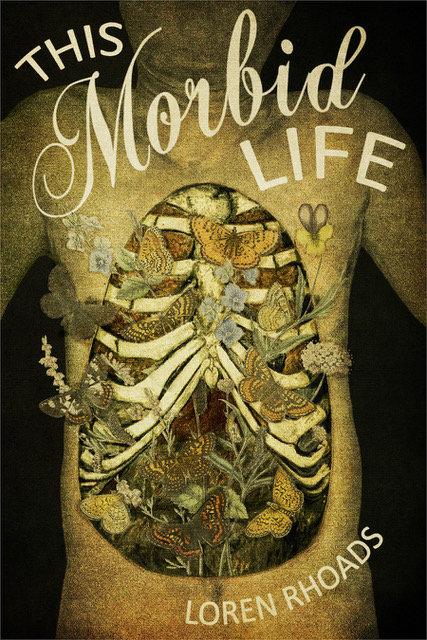
Loren Rhoads is the editor of Death’s Garden: Relationships with Cemeteries and Death’s Garden Revisited. She was the editor of Morbid Curiosity magazine and the book that grew out of it, Morbid Curiosity Cures the Blues: True Tales of the Unsavory, Unwise, Unorthodox, and Unusual. She’s the author of a space opera trilogy, a short story collection called Unsafe Words, two memoirs – This Morbid Life and Wish You Were Here: Adventures in Cemetery Travel – and a travel guide called 199 Cemeteries to See Before You Die. See what she gets up to at https://lorenrhoads.com.


Death’s Garden Revisited’s blurb:


The book Death's Garden Revisited collects 40 powerful personal essays — accompanied by full-color photographs — to illustrate why people visit cemeteries. Spanning the globe from Iceland to Argentina and from Portland to Prague, Death’s Garden Revisited explores the complex web of relationships between the living and those who have passed before.


Genealogists and geocachers, travelers and tour guides, anthropologists, historians, pagan priestesses, and ghost hunters all venture into cemeteries in these essays. Along the way, they discover that cemeteries don't only provide a rewarding end to a pilgrimage, they can be the perfect location for a first date or a wedding, the highlight of a family vacation, a cure for depression, and the best possible place to grasp history. Not to mention that cemetery-grown fruit is the sweetest.


1)      What is your current work in progress?

At the moment, I’m wrapped up in editing Death’s Garden Revisited. Most of the essays are edited and ready to go, but there are a few more to go over. Backers to the Kickstarter funded two additional essays, so I’ll need to commission those. I need to pull together the photographs and finish my introduction before I turn everything over to the book designer. I’m excited to see the whole book assembled.


Once I finally hand that off, I’m editing a book for Wily Writers called Tales of Nightmares. It’s going to be an anthology of horror short stories. I’ve got stories by Lisa Morton, Angel Leigh McCoy, E.S. Magill, and Jennifer Brozek already. That book will be out in July.


2)      What is your favorite beer/alcoholic drink/wine?

I’m trying to create a cocktail now. It’s called the Ghost of Lone Mountain Cemetery. Lone Mountain Cemetery used to take up the middle of San Francisco, where I live. That graveyard was renamed Calvary because people thought Lone Mountain sounded really lonely and uninviting. Calvary Cemetery was removed in the early 20th century and replaced by the University of San Francisco. I’ve heard that bones they missed removing continued to wash up through the soil for years.


The cocktail is a combination of St. George Gin, crème de mure, and crème de violette, with a big skull-shaped ice cube in it.


3)      What do you do to break a case of writer’s block?

I switch to writing longhand in a notebook. There’s something about feeling the words flow through my arm to my pen that shakes things loose for me, better than sitting at a keyboard.


4)      Have you had any negative fan experiences, such as cyber stalking or the like?

I think I’ve been really lucky. All my fans are lovely people.


5)      What’s your stance on reviews of your work? Do you ignore them, read every one, obsess over them?

When The Dangerous Type came out – the first book in my space opera series – I read every review. I used some of the commentary as jumping-off points for the essays I wrote for the blog tour. Since then, I’ve decided that reviews usually tell more about their authors than they do about the books under review. I’ll glance them over from time to time, but I don’t pore over them anymore. Reviews aren’t intended for authors. They’re meant for readers.


6)      How do you handle rejection from magazines and publishers? Do you have any particularly funny or unprofessional rejections to share?

For a while I was trying to get 100 rejections a year. I made it a contest and gave myself a prize every time I got 10 rejections. It took the sting out of it and forced me to keep sending things out without agonizing too much. When Emerian Rich and I made our Spooky Writers Planner, I asked her to design a rejection chart. It’s like a gameboard.


7)      Do you usually do a lot of research before you start a project?

Way too much.


8)      What are your feelings about your earliest stories? Do you feel they still hold up, or are you a bit embarrassed by them?

There are a couple of early pieces that were published, but I’ve let them vanish. I’m not embarrassed by them, but they’re not up to the standards I hold myself to now. Some of my other early stories went into Unsafe Words. I’m still proud of those pieces.


9)      What pieces of advice would you give to aspiring writers?

Keep at it. Writing is a long game.


10)  What’s your writing history? Did you start as an adolescent, or was it later? And then how long did it take before you started submitting your work?

I wanted to study creative writing in college, but my parents talked me into journalism instead, so I’d have a “marketable skill” instead of an English degree. After I graduated, I spent a summer at the Clarion Science Fiction Workshop (as it was called then). That convinced me to start submitting my short stories professionally.


11)  What’s your post-writing process? Do you edit extensively? Do you use beta readers or writing groups?

When I’m writing fiction, I write things all out of order, then piece them together. That way a lot of the revision goes into a book before I consider it finished enough to show to people. Then I have a couple of close friends who read my work. I don’t really think of them as beta readers, but that’s what they are, I guess. For the last couple of books, I’ve paid a copyeditor. There have been a couple of pieces I’ve run past sensitivity readers. I guess the process varies, depending on the subject matter.


12)  How much of your work is based on your personal experiences, such as work, relationships, and so on?

I’m not sure what the percentage is, but it feels like a lot.


13)  Do you have any writing rituals, such as doing it at a regular time every day, or writing in public places, or while listening to music?

In the Before Times, I used to drop my kid off at school every morning and go write in a café for an hour or two. Now I have writing zooms every morning and afternoon with various groups. I work for at least 5-6 hours a day writing, editing, and managing the business. I like the rhythm of writing at the same time every day. Having a schedule keeps me from feeling guilty when I take time away from my desk.


14)  How has the COVID-19 pandemic affected you, both writing-wise and in general?

Since my kid has a chronic illness, we’ve kept to a really strict isolation for the last couple of years. I just started walking around my neighborhood in January, but I keep my mask on all the time, even when I’m alone. I would feel terrible if I ever brought anything home to her, especially since we think her health problems were started by a virus when she was in elementary school.


So I’ve done everything online for the last couple of years: given readings, met with my local HWA group, co-worked with other writers, hosted happy hours, attended conventions… Thank goodness for the internet, or I would have been really lonely.


15)   You’ve been a writer, editor, and publisher. Which of these is your favorite? And has serving as the latter two changed you as a writer?

I still want to grow up to be a novelist, but the nonfiction I’ve written makes more money. I love editing, but it hasn’t been as lucrative. Still, it’s really rewarding to help a writer make their work the best it can be. Being a publisher is my least favorite part. The business isn’t fun for me. It just allows me to have the control I want over the other aspects.


16)   As an editor/publisher, what’s the most unprofessional and/or crazy experience you’ve had with a writer, or submitter?

When the final issue of Morbid Curiosity magazine came out, one of the first-time contributors pitched a fit about seeing her essay in print. She had already rewritten it several times after I accepted it. Once the essay was edited and set in design, I told her she couldn’t “fix” it anymore. She had to call it done and move on. After her contributor’s copy arrived, she told me she wanted to get ahold of all the copies of the magazine so she could tear her essay out of it. To be honest, it just underlined my decision to stop publishing the magazine with issue number 10. I’d lost patience with people’s drama after 10 years.


    So I'd like to thank Loren for stopping by, and giving us some more information about "Death's Garden Revisited," and about her life and career in general.  Still more info about this book to come!

Saturday, April 2, 2022

Exotic/Disgusting Foods and Beverages Forum--More Weird Chips (aka Crisps)

       This is another sequel.  Back on January 4th, 2020 I discussed some chips made from odd veggies or fruits, unlike the usual potato ones.  Well, I got lucky again.  I wasn't even looking for them--I just saw some bags in the potato chip/pretzel/snack-food-in-general aisle.  I went home with two types I've never had before--beet chips from the Rhythm company, and coconut chips from Dang.

     According to the official website for Rhythm Superfoods, LLC, it started in the kitchen of The Daily Juice, a juice bar in Austin, Texas.  The owners made some kale chips, which proved popular with the customers, so eventually a business was formed to market snacks.  (Oddly, I didn't see the founder(s) names in this brief recap anywhere--other online sources told me that Scott Jensen is the CEO and a co-founder.  Apparently Clayton Christopher and David Smith were co-founders as well, joining some other unnamed co-founders and investors.)  Other than the beet kind I tried, Rhythm also makes cauliflower bites, mushroom crisps, watermelon slices, broccoli bites, and of course the original kale chips.  Like many of the companies I discuss on this blog, Rhythm is really into being healthy (or I should say what many folks consider healthy).  So their wares are organic, vegan, and free of GMOs and gluten.  For the most part--the watermelon and mushrooms aren't organic.  Plus, some of their food is kosher.  I was surprised that while Rhythm doesn't use sesame and cashews in their products, the facility where they're made does, so beware if you're afflicted with terribly sensitive allergies.  Rhythm's founding date is listed as being 2009, and one source claimed their revenue in 2017 was $10,000,000.  And presumably now it's even higher.  Some brief trivia about beets--they were domesticated in the Middle East very long ago, at least back to Ancient Egyptian periods.  For the greens of the plant though--the beet root reportedly wasn't consumed until Roman times.  Finally, the beets I tried were actually grown in Mexico.

     Dang Foods has kind of a similar origin story.  Founder Vincent Kitirattragarn started with a pop up restaurant in New York City in 2011.  His mom, who goes by "Mama Dang," helpfully provided some Thai recipes, since the family was originally from Thailand.  The coconut chips Vincent made from his mom's recipe were so good, and so popular, that Vincent decided to start a company selling snacks.  Which he did, in 2012, naming the business after his mother.  (I don't know if "Dang" is her actual name, or is a nickname, however.)  Vincent's brother Andrew also is a major part of Dang Foods.  While coconut chips remain the company's flagship brand, it also sells various rice crisps, plant-based bars, and even bamboo utensils.  Like Rhythm, Dang prides itself as being vegan, and free of GMOs and gluten.  Although they do use some tree nuts, and their facility processes soy.  Dang itself is now based in Berkley, California, although the source of their coconuts is Thailand.


Rhythm organic and naked beet chips:  The chips are deep red in color, of course, and twisted and curled.  To be graphic, they kind of resembled giant scabs.  The texture was more spongy than crisp, so calling them a "chip" is somewhat misleading.  The taste was like....a dried beet.  No better or worse.  Since the only ingredient was beets, these were extremely bland.  Since I'm not a beet fan in general, I didn't think much of these.  Some seasoning, even if it was just salt, would have helped, I think.


Dang coconut chips, original recipe:  These looked like noodles, being thin yellowish-white strips of coconut.  The texture was slightly crunchy.  The taste was blandish at first, but they kind of grew on me.  They had a pleasant sweetish flavor.  This was surely helped by the addition of sugar and salt on them.  I like, but don't love coconut in other formats, so that aided my impression of them, too.


     Given how unimpressed I was with the Rhythm beet chips, if I do try any more of the Rhythm line it'll probably be of a food type I usually enjoy, like the mushroom, kale, or broccoli snacks.  (And even then only if they have some kind of seasoning on them.)  But I will more enthusiastically try other Dang products, and would probably buy the coconut chips again.  In closing, if you're strongly into beets, you might well like the Rhythm chips, but if you're not I'd avoid them.  And the same type of thing with the Dang coconut chips--if you're a coconut fan, you'll probably like these as well. 


Wednesday, March 30, 2022

Facebook Party Announcement


        Good news about "Death's Garden Revisited."  The Kickstarter for it has been doing well--the 6th goal has been reached, with 16 days to go.  Thanks for everyone who's stopped by and contributed. If you haven't but are interested, please consult my post from a couple of weeks ago for more info.
         Otherwise, this Saturday, April 2nd, Loren Rhoads is hosting a Facebook party for this book, from noon to 3 pm. (Pacific time.)  If you stop by you can directly communicate with Loren and many of the other contributors to "Death's Garden Revisited."  I'll be around from 12:30 pm. to 2 pm., fielding questions about exhumations and archaeology.  Anyway, here's the link: 
                                                                                 

Additionally, I will be posting on my regular day, which is also Saturday, April 2nd.


Saturday, March 26, 2022

Exotic/Disgusting Foods and Beverages Forum--Canadian/Swiss Chewing Gum

      This was a total impulse buy.  I saw it on the shelf abutting the checkout line at my local Shop-Rite, while waiting for previous customers to finish their shopping trips.  The box read, "Pur," (with an umlaut over the "u"), and "aspartame free" was also on the front of the package.  When I saw it was a Canadian company, I thought "Why not?"  The two flavors I bought were spearmint and coolmint.

     As some explanation, I realize that including gum as a food (or a beverage!) is admittedly a stretch, since most people don't actually send the product through their digestive system.  But, on the other hand, gum does have calories, so even if consumers spit it out, some tiny amount of it (presumably the sugar, or other flavoring) does actually make its way into their stomachs.  Additionally, I have never reviewed gum on my blog, so I thought it might be a nice change.  I should also note that historically I've not been a fan of gum in general.  I tried many kinds as a lad, but was always frustrated by it, because even the ones that tasted good lost this flavor disappointingly soon.  And then it was like chewing on a piece of plastic, which I found pretty gross and off-putting.  Gag-inducing, often.  So going into this I knew the odds of me enjoying this gum were fairly slim.

     Pur was founded in 2010, by Jay Klein, in Canada.  The company started out just making gum, but in 2015 they added mints to their fold.  Aside from the kinds I tried, Pur also makes a wintergreen, peppermint, pomegranate mint, chocolate mint, bubblegum, and cinnamon type.  The mint kinds are spearmint, peppermint, tangerine tango (mango?), polar mint, and mojito mint.  The products are actually made in Switzerland, largely because this country is more amenable to avoiding nuts and GMO's.  Other than lacking these two substances, Pur products are proudly touted as being free of sugar, gluten, and soy, and being vegan-appropriate.

     Then there's the big issue--aspartame.  The Pur company, and many others, think that this sugar substitute is bad.  Some contend that it causes symptoms like headaches, dizziness, and nausea.  In contrast, Pur claims that their sugar substitute of choice, xylitol, is beneficial, especially for oral health.  But here's the thing--like a lot of health claims, the problems with aspartame seem unproven, or at least highly exaggerated.  The FDA and other health organizations continue to approve aspartame, as no credible scientific evidence indicates that it's dangerous.  Studies that purport to show that it is are questionable.  For example, one small study seemed to find that aspartame can cause headaches in those who get migraines, but so did eating cheese, chocolate, citrus fruits, ice cream, caffeine, and alcohol.  It appears that the negative effect might have been psychosomatic, in other words.  Furthermore, xylitol itself has some adverse effects, which are more proven than aspartame.  The EU forbids its use in soft drinks because in large enough amounts it can cause a laxative effect, or diarrhea.  Finally, the battle against aspartame seems a bit strange for another reason.  While aspartame was very popular in the 1980's and 1990's, since then sucralose has been the most used sugar substitute, since unlike aspartame it has a longer shelf life and maintains its sweetness even after heating.  I realize I may have blundered into a hornet's nest here, but as far as I could learn aspartame's dangerousness is overblown, perhaps completely.  But I get that many people strongly disagree with me.  (To be fair, xylitol does help with oral health, but this seems to mostly be because it stimulates saliva in the mouth, which washes away bacteria, not because it's necessarily anti-cavity in itself.)


Pur spearmint gum:  The pieces were white rectangles, about .75 inches by .5 inch (or about 2 cm. by 1 cm.).  Okay odor.  Taste was alright, minty, but was lost within like 30 seconds.  So it became revolting pretty quickly, forcing me to spit it out.


Pur coolmint gum:  These pieces were the same size, shape, and color as the spearmint variety, and also had a decent smell.  But once again the taste was fleeting.  The flavor was maybe slightly better than the spearmint, but it was tough to tell.  Once again I ejected it rapidly.


     So, just to repeat, I acknowledge that I'm not the audience for this product, so bear that in mind.  Folks who like gum may well enjoy these.  But for someone who usually dislikes gum, these Pur kinds definitely didn't change my mind.  I think they were a bit pricier than average gum, as well.

     One final tidbit--no matter what one's stance is on aspartame, or xylitol, both sides agree that xylitol is very dangerous for dogs.  So if you drop a piece of xylitol-flavored gum, make sure you grab it quick before Fido can get to it.  However, apparently cats, rats, rhesus macaques, and horses can eat it safely.  (I'm kidding here--even though xylitol won't hurt these species, I think allowing a pet to eat gum is cruel and perverse.)